(This is from a note Grandpa sent yesterday.)
Just finished watching HBO piece on Vince Lombardi. It reminded me when we were watching the final game of the NFL season Dec 31, 1967 at the Sandfield home on Wentwood in Dallas. The Cowboys were leading the Packers 17-14. The Packers were at the Cowboys goal line but tried twice to put it over without success. With seconds remaining on 4th down Bart Starr put the ball over on a quarterback sneak. As he did, I yelled, "Yea!" at the top of my voice. The room fell quiet; I had forgotten I was in a room of Cowboy fans and my hosts.
Sunday, December 12, 2010


Tuesday, December 7, 2010
A Point of view
(Keith rescued this entry from 'draft' status. It was originally created in 2009.)
Last night Yvette and I watched a movie. Afterward I turned the tube off and as I often do, said, "Let's talk." It's a way for her to talk about anything that comes to mind; it can be our children, the women who help take care of us, the next ballet program, or about how we met.
Last night Yvette and I watched a movie. Afterward I turned the tube off and as I often do, said, "Let's talk." It's a way for her to talk about anything that comes to mind; it can be our children, the women who help take care of us, the next ballet program, or about how we met.
We talked for a while and then I told her," I've been sweating. I need to shower. I stink." She sniffed me, then shrugged her shoulders, "I thought all men smelled that way."
Beaver County Times: Doc from area wonders about air
Gino Piroli has been corresponding with Grandpa and wrote an article about him. Check it out...
Beaver County Times: Doc from area wonders about air
Beaver County Times: Doc from area wonders about air
Monday, November 8, 2010
Your new (old) blogger
I’m Dr. Dan Jackson, your new resident blogger. Let me tell you about myself.
I was born 92 years ago in Aliquippa, Pennsylvania, a small steel mill town on the Ohio River. I went to school at Geneva College, then to St. Louis University Medical School where I got my degree in 1941.
After that it was an internship at the Allegheny Hospital in Pittsburgh, three and a half years in the Army, mostly in the South Pacific, and residencies at Cleveland City Hospital and the Veteran’s Administration Hospital in New Orleans.
Our family moved to Houston on June 30, 1949 where the Texas Medical Center was just beginning to take shape. I opened my practice of internal medicine in a small office at the corner of Rosalie and San Jacinto across from the old Methodist Hospital. I moved to the Medical Center in 1954.
In 1976 I was delighted to be joined by my son Dr. Richard Jackson; we named our new organization, Associates in Medicine. Shortly after that we moved to the Scurlock Towers where the group has grown to its present size. It has a fine reputation for outstanding medical care.
I retired in 1995. I spend my time playing bridge, writing, reading, and watching birds and squirrels in my back yard.
I was born 92 years ago in Aliquippa, Pennsylvania, a small steel mill town on the Ohio River. I went to school at Geneva College, then to St. Louis University Medical School where I got my degree in 1941.
After that it was an internship at the Allegheny Hospital in Pittsburgh, three and a half years in the Army, mostly in the South Pacific, and residencies at Cleveland City Hospital and the Veteran’s Administration Hospital in New Orleans.
Our family moved to Houston on June 30, 1949 where the Texas Medical Center was just beginning to take shape. I opened my practice of internal medicine in a small office at the corner of Rosalie and San Jacinto across from the old Methodist Hospital. I moved to the Medical Center in 1954.
In 1976 I was delighted to be joined by my son Dr. Richard Jackson; we named our new organization, Associates in Medicine. Shortly after that we moved to the Scurlock Towers where the group has grown to its present size. It has a fine reputation for outstanding medical care.
I retired in 1995. I spend my time playing bridge, writing, reading, and watching birds and squirrels in my back yard.
Monday, October 4, 2010
Readin' and writin'
When I was a student at Highland Elementary school in Aliquippa, one of my teachers was Ms Crawford, a tall, vivacious red-head. She taught us how to open new school books---hold the book with its spine on the desk and gradually strip the covers and pages away on each side till the pages and covers lie flat on the desk. And she said, "Light should come from the left on the book you are reading or on the paper where you are writing."
We did not question her wisdom; we were so excited to learn to read and write that we did as we were told.
About four years ago, I wrote a short story about my time at Highland and the business of making sure which side the light came from. Evy and I made a trip to Rosston, where the family lived when she was born and to Aliquippa where we had rounded out our elementary education. By then, of course, Highland was only a weed-filled lot. Still, the question about the importance of having light come from the left remained.
This morning, eighty four years after Ms Crawford and Highland, I got my answer. After breakfast, I began the crossword puzzle in the morning paper; light came from the window at my right. As I wrote (right-handed), there was an annoying shadow on the paper. I asked Lucy to turn the ceiling light on. The light went on in my head,too: WHEN THE LIGHT COMES FROM THE RIGHT, THERE IS A SHADOW ON THE PAPER MADE BY MY HAND AND PENCIL. That shadow makes it hard for me to see what I'm writing. So simple.
More new questions: why did it take me eighty four years to figure that out? And did the explanation for writing hold true for reading as Ms Crawford taught us? And what would left-handed children do?
We did not question her wisdom; we were so excited to learn to read and write that we did as we were told.
About four years ago, I wrote a short story about my time at Highland and the business of making sure which side the light came from. Evy and I made a trip to Rosston, where the family lived when she was born and to Aliquippa where we had rounded out our elementary education. By then, of course, Highland was only a weed-filled lot. Still, the question about the importance of having light come from the left remained.
This morning, eighty four years after Ms Crawford and Highland, I got my answer. After breakfast, I began the crossword puzzle in the morning paper; light came from the window at my right. As I wrote (right-handed), there was an annoying shadow on the paper. I asked Lucy to turn the ceiling light on. The light went on in my head,too: WHEN THE LIGHT COMES FROM THE RIGHT, THERE IS A SHADOW ON THE PAPER MADE BY MY HAND AND PENCIL. That shadow makes it hard for me to see what I'm writing. So simple.
More new questions: why did it take me eighty four years to figure that out? And did the explanation for writing hold true for reading as Ms Crawford taught us? And what would left-handed children do?
Wednesday, September 15, 2010
Brief encounter
Today I went to the 2nd Michael E. DeBakey lecture. The speaker was a charming Egyptian who does research in London, has been knighted for his work and also works to help certain African groups in their struggle to better themselves.He spoke about heart disease and its treatment with implanting a pump to help the heart pump better. It was more than that---dealing at a microscopic level, at a cellular level; in terms that I knew nothing about.
Before the talk began (the place was full) Mrs DeBakey came in; Rob introduced her to the speaker, then to most of us in the front rows, including me..
When the session was over, I remained seated till every one was streaming out. Mrs. DeBakey came over to me. She speaks with an accent (German), which made my understanding her much more difficult. When she asked me where I lived, I told her about our moving to Houston in '49 and how much her husband had done for Methodist, Baylor, the Medical Center, Houston, the field of medicine,and on and on. I said I was present when medical history driven by her husband was being made and I considered it a honor to watch.She thanked me.
Before the talk began (the place was full) Mrs DeBakey came in; Rob introduced her to the speaker, then to most of us in the front rows, including me..
When the session was over, I remained seated till every one was streaming out. Mrs. DeBakey came over to me. She speaks with an accent (German), which made my understanding her much more difficult. When she asked me where I lived, I told her about our moving to Houston in '49 and how much her husband had done for Methodist, Baylor, the Medical Center, Houston, the field of medicine,and on and on. I said I was present when medical history driven by her husband was being made and I considered it a honor to watch.She thanked me.
Monday, August 16, 2010
Memorial for Irv
Irv was my best friend. We first met when he, Sherry, and Karen visited us shortly after they moved to Houston in 1957.
That visit had an element of who was going to be the big dog in our relationship. Somehow, we got around to talking about anorexia nervosa. That was the kind of problem that a child psychiatrist would take care of; that was Irv’s specialty. So I asked him, “Have you seen the latest about anorexia nervosa in the Proceedings of the Mayo Clinic? ”
He paused and admitted, “No, I haven’t.”
I dashed back to my study, found the article, and showed it to him. The game had started. Score: Dan--one, Irv--zero.
That didn’t faze Irv: in fact, we developed a genuine friendship. When I saw all the books he read, all the magazines he subscribed to, all the journals piled up on his coffee table, all the meetings he attended, all the countries he visited, I surrendered. No contest.
Our friendship was nourished by the closeness of Yvette and Sherry. They talked every day by phone. Sometimes twice a day, week after week, month after month. Finally Irv asked, “What do they talk about? “
I shrugged my shoulders, “Beats me.”
Then came the two-for-one phase of our lives. Houston’s restaurants offered coupons giving two meals for the price of one. The four of us were children of the Great Depression, so we attacked the offer of 2 for 1 with gusto. The downside was that most of the restaurants were one star or less. No matter, we filled our stomachs and at ½ price. If the food wasn’t good, the price was.
At about that time Irv and Yvette went on diets to combat their coronary artery disease. Result; fish, vegetables, fresh vegetables, more fish, and more vegetables. But we were saving money and eating healthy.
Then came the event that literally changed my life. Irv heard that Paul Gittings Jr of the portrait photography studio was giving a 10-week course on photography. Irv invited me to go with him every Wednesday night for 10 weeks.
I had been mildly interested in the camera since I had been bar mitzvah. Most of you don’t know that many years ago Eastman Kodak gave every Jewish boy a box camera when he reached his 13th birthday. Clever marketing: the lucky boy got a camera but had to buy film, then pay for having it processed and printed- a gold mine for Kodak. The course by Gittings reawakened my interest in photography and ever since has been important in adding life to my years.
Irv and I often spent Saturday mornings doing nature photography. I photographed flowers and leaves; Irv took pictures of me as I photographed.
Irv was a profound source of advice for me. I knew he was wise about life and helping people. Through the years when I called him, no matter the time of day or a weekday or weekend, he made himself available. When I called, he would respond, “Come over.” He was never judgmental; he gave me solutions to perplexing problems. I knew I could trust him. And he enjoyed advising me about problems that he and I shared as aging males and good friends.
In a way I could never repay him for what he did for me. I tried laughing at his sense of humor; well, I really didn’t laugh, I groaned. And it wasn’t humor; it was puns, awful puns.
For his birthday I invited Irv to our house for lunch. We talked, ate a bowl of hearty soup, sipped red wine, and ate chocolate birthday cake. We agreed we still had all our marbles. As I dropped him off at his house, he glanced at his watch. He noted that he had stayed longer than usual. He asked, “What shall I tell Sherry?”
I suggested “Tell her we’ve been talking about her.” He thanked me profusely. Hey, what are friends for?
Who will I send emails to, who will I invite for lunch and conversation? Who will I sing Happy Birthday to? Who will I forward sexy e-mails to? Who will I talk to about my problems?
Irv, I do miss you.
That visit had an element of who was going to be the big dog in our relationship. Somehow, we got around to talking about anorexia nervosa. That was the kind of problem that a child psychiatrist would take care of; that was Irv’s specialty. So I asked him, “Have you seen the latest about anorexia nervosa in the Proceedings of the Mayo Clinic? ”
He paused and admitted, “No, I haven’t.”
I dashed back to my study, found the article, and showed it to him. The game had started. Score: Dan--one, Irv--zero.
That didn’t faze Irv: in fact, we developed a genuine friendship. When I saw all the books he read, all the magazines he subscribed to, all the journals piled up on his coffee table, all the meetings he attended, all the countries he visited, I surrendered. No contest.
Our friendship was nourished by the closeness of Yvette and Sherry. They talked every day by phone. Sometimes twice a day, week after week, month after month. Finally Irv asked, “What do they talk about? “
I shrugged my shoulders, “Beats me.”
Then came the two-for-one phase of our lives. Houston’s restaurants offered coupons giving two meals for the price of one. The four of us were children of the Great Depression, so we attacked the offer of 2 for 1 with gusto. The downside was that most of the restaurants were one star or less. No matter, we filled our stomachs and at ½ price. If the food wasn’t good, the price was.
At about that time Irv and Yvette went on diets to combat their coronary artery disease. Result; fish, vegetables, fresh vegetables, more fish, and more vegetables. But we were saving money and eating healthy.
Then came the event that literally changed my life. Irv heard that Paul Gittings Jr of the portrait photography studio was giving a 10-week course on photography. Irv invited me to go with him every Wednesday night for 10 weeks.
I had been mildly interested in the camera since I had been bar mitzvah. Most of you don’t know that many years ago Eastman Kodak gave every Jewish boy a box camera when he reached his 13th birthday. Clever marketing: the lucky boy got a camera but had to buy film, then pay for having it processed and printed- a gold mine for Kodak. The course by Gittings reawakened my interest in photography and ever since has been important in adding life to my years.
Irv and I often spent Saturday mornings doing nature photography. I photographed flowers and leaves; Irv took pictures of me as I photographed.
Irv was a profound source of advice for me. I knew he was wise about life and helping people. Through the years when I called him, no matter the time of day or a weekday or weekend, he made himself available. When I called, he would respond, “Come over.” He was never judgmental; he gave me solutions to perplexing problems. I knew I could trust him. And he enjoyed advising me about problems that he and I shared as aging males and good friends.
In a way I could never repay him for what he did for me. I tried laughing at his sense of humor; well, I really didn’t laugh, I groaned. And it wasn’t humor; it was puns, awful puns.
For his birthday I invited Irv to our house for lunch. We talked, ate a bowl of hearty soup, sipped red wine, and ate chocolate birthday cake. We agreed we still had all our marbles. As I dropped him off at his house, he glanced at his watch. He noted that he had stayed longer than usual. He asked, “What shall I tell Sherry?”
I suggested “Tell her we’ve been talking about her.” He thanked me profusely. Hey, what are friends for?
Who will I send emails to, who will I invite for lunch and conversation? Who will I sing Happy Birthday to? Who will I forward sexy e-mails to? Who will I talk to about my problems?
Irv, I do miss you.
Saturday, August 7, 2010
On the Dummy Line - with NEW lyrics
(posting by Keith)
For those of us who travelled any distance by car with Dan and Yvette, the song "On the Dummy Line" is well known. We've memorized three or four verses about Farmer Jones, my girl in Mobile, and some other characters. It gives us a warm and familiar feeling when we hear it or sing it. Somehow Rachael and I were talking about the song and we thought we should do some research to see if we could find more verses. Success! Rachael found a bunch. They are shown below for your pleasure, but I have to make a suggestion. I've found that they just don't work very well when read silently in my head. They were about eight times funnier when Rachael was reading them out loud to me. So I suggest printing this posting and finding a willing family member to share the fun of reading them aloud. I should also mention that some of them are rated PG, maybe even PG13.
Special thanks to Rachael for assembling the list.
On the dummy line,
On the dummy line,
Rain or shine
I'll pay my fine
Rain or shine
I'll pay my fine
Ridin' ridin' ridin' on the dummy, dummy line.
I saw a snail
Go whizzing past;
The guy beside me said,
"This train is fast!"
Said I, "Old man,
That might be true,
But the question is,
What's it fast compared to?"
I said to the brakeman,
"Can't you speed up a bit?"
Said he, "You can walk
If you don't like it."
Said I, "Mr. Brakeman,
I'd like to take your dare,
But the folks don't expect me
Til the train gets there."
There was a doctor
By the name of Beck
He fell in the well
And he broke his neck;
It served him right,
As you may own;
He should attend the sick
And leave the well alone!
Farmer Jones,
He went out in a boat,
The boat turned over,
And we threw him a rope;
Said Farmer Jones,
"Well, I can't swim,
But I'll be drowned first
Afore I'll be roped in!"
A little boy
On his way home from school
Saw a dollar bill
At the foot of a mule;
He stooped right down
Just as sly as a fox,
You can see him at the hospital
Till seven o'clock.
I once had a girlfriend
Down in Mobile,
She had a face
Like a lemon peel.
She had a wart
At the end of her chin;
She said it was a dimple,
But a dimple turns in!
Little Willy was a good Boy Scout
He gouged his sister's eyeballs out.
When his mother said, "Willy, stop,'
He jumped on them to make them pop.
Little Willy at a passing gent
threw a bag of wet cement.
Then Willy said, "when you dry
you're sure to be a real hard guy."
Little Willy was full of gore
he nailed his sister to the door.
Said Willy's mother, in a voice so faint:
"Willy, please -- you'll scratch the paint!"
Little Willy found some dynamite,
couldn't understand it quite.
Curiosity never pays –
it rained Willy seven days!
Little Willie Jones fell down the elevator
There they found him six months later
They held their noses and said, "Gee, whiz,
What a spoiled child our little Willie is."
I looked out my window so early one morn
There was a tramp who was munching the lawn
I said "My good man, if you're after a snack
The grass is much longer around the back."
I called on my girl, her name was Miss Brown
She was having a shower and couldn't come down
I said "Slip on something, you'd better be quick"
She slipped on the soap and, my word, she was quick
Mary the milkmaid was milking the cow
The trouble with Mary, she didn't know how
The farmer came out and he gave her the sack
So she turned the cow over and poured the milk back
I woke up in the morning and spied upon the wall,
The bedbugs and the roaches were having a game of ball,
The score was 19-20, the roaches were ahead,
The bedbugs hit a homerun and knocked me out of bed.
the other day i saw a bear
a great big bear oh way up there
he looked at me, i looked at him
he sized up me, i sized up him
he said to me, "why don't you run?
i see you ain't got any gun"
and so i ran away from there
and right behind me was that bear
ahead of me there was a tree
a great big tree oh lucky me
and so i jumped into the air
and missed that branch oh way up there
now don't you fret and don't you frown
i caught that branch on the way back down
the moral of my story is
don't talk to bears in tennis shoes
Little Willy coming home from school
Spied a half a dollar at the foot of a mule
Stooped down to pick it up, quiet as a mouse
Funeral tomorrow at little Willy's house!
Little birdie in the sky
Dropped some whitewash in my eye
Says I to me; says me to I
"I'm sure glad that cows can't fly!"
There was a boy by the name of Jack
Pitched his tent on a railroad track
Midnight express came around the bend
What kind of flowers did you send?
There once was a hunter, his name was O'Hare
He was chased by a grizzly bear
The people all thought he was out of his mind
Running down the street with a bear behind!
There was an old witch by the name of Nan
Who tried to pass as a good humor man
Couldn't fool the kids, they all stayed home -
They would not buy from an ice cream crone.
For those of us who travelled any distance by car with Dan and Yvette, the song "On the Dummy Line" is well known. We've memorized three or four verses about Farmer Jones, my girl in Mobile, and some other characters. It gives us a warm and familiar feeling when we hear it or sing it. Somehow Rachael and I were talking about the song and we thought we should do some research to see if we could find more verses. Success! Rachael found a bunch. They are shown below for your pleasure, but I have to make a suggestion. I've found that they just don't work very well when read silently in my head. They were about eight times funnier when Rachael was reading them out loud to me. So I suggest printing this posting and finding a willing family member to share the fun of reading them aloud. I should also mention that some of them are rated PG, maybe even PG13.
Special thanks to Rachael for assembling the list.
On the dummy line,
On the dummy line,
Rain or shine
I'll pay my fine
Rain or shine
I'll pay my fine
Ridin' ridin' ridin' on the dummy, dummy line.
I saw a snail
Go whizzing past;
The guy beside me said,
"This train is fast!"
Said I, "Old man,
That might be true,
But the question is,
What's it fast compared to?"
I said to the brakeman,
"Can't you speed up a bit?"
Said he, "You can walk
If you don't like it."
Said I, "Mr. Brakeman,
I'd like to take your dare,
But the folks don't expect me
Til the train gets there."
There was a doctor
By the name of Beck
He fell in the well
And he broke his neck;
It served him right,
As you may own;
He should attend the sick
And leave the well alone!
Farmer Jones,
He went out in a boat,
The boat turned over,
And we threw him a rope;
Said Farmer Jones,
"Well, I can't swim,
But I'll be drowned first
Afore I'll be roped in!"
A little boy
On his way home from school
Saw a dollar bill
At the foot of a mule;
He stooped right down
Just as sly as a fox,
You can see him at the hospital
Till seven o'clock.
I once had a girlfriend
Down in Mobile,
She had a face
Like a lemon peel.
She had a wart
At the end of her chin;
She said it was a dimple,
But a dimple turns in!
Little Willy was a good Boy Scout
He gouged his sister's eyeballs out.
When his mother said, "Willy, stop,'
He jumped on them to make them pop.
Little Willy at a passing gent
threw a bag of wet cement.
Then Willy said, "when you dry
you're sure to be a real hard guy."
Little Willy was full of gore
he nailed his sister to the door.
Said Willy's mother, in a voice so faint:
"Willy, please -- you'll scratch the paint!"
Little Willy found some dynamite,
couldn't understand it quite.
Curiosity never pays –
it rained Willy seven days!
Little Willie Jones fell down the elevator
There they found him six months later
They held their noses and said, "Gee, whiz,
What a spoiled child our little Willie is."
I looked out my window so early one morn
There was a tramp who was munching the lawn
I said "My good man, if you're after a snack
The grass is much longer around the back."
I called on my girl, her name was Miss Brown
She was having a shower and couldn't come down
I said "Slip on something, you'd better be quick"
She slipped on the soap and, my word, she was quick
Mary the milkmaid was milking the cow
The trouble with Mary, she didn't know how
The farmer came out and he gave her the sack
So she turned the cow over and poured the milk back
I woke up in the morning and spied upon the wall,
The bedbugs and the roaches were having a game of ball,
The score was 19-20, the roaches were ahead,
The bedbugs hit a homerun and knocked me out of bed.
the other day i saw a bear
a great big bear oh way up there
he looked at me, i looked at him
he sized up me, i sized up him
he said to me, "why don't you run?
i see you ain't got any gun"
and so i ran away from there
and right behind me was that bear
ahead of me there was a tree
a great big tree oh lucky me
and so i jumped into the air
and missed that branch oh way up there
now don't you fret and don't you frown
i caught that branch on the way back down
the moral of my story is
don't talk to bears in tennis shoes
Little Willy coming home from school
Spied a half a dollar at the foot of a mule
Stooped down to pick it up, quiet as a mouse
Funeral tomorrow at little Willy's house!
Little birdie in the sky
Dropped some whitewash in my eye
Says I to me; says me to I
"I'm sure glad that cows can't fly!"
There was a boy by the name of Jack
Pitched his tent on a railroad track
Midnight express came around the bend
What kind of flowers did you send?
There once was a hunter, his name was O'Hare
He was chased by a grizzly bear
The people all thought he was out of his mind
Running down the street with a bear behind!
There was an old witch by the name of Nan
Who tried to pass as a good humor man
Couldn't fool the kids, they all stayed home -
They would not buy from an ice cream crone.
Sunday, June 27, 2010
Short story of my life
When I finished high school, Dad asked me about my plans.
I said, “I want to be a veterinarian.”
He said, “Why not be a real doctor?”
“I said, ‘OK’.” I went to college and medical school.
After my internship, I joined the Army medical corps. I served in the South Pacific as a general medical officer and a dermatologist and as an anesthetist with the 58th Evac Hospital. When I returned home, I knew I wanted more medical training. The experience as an anesthetist had been so interesting that I applied for a residency in anesthesiology. I was accepted at Charity Hospital in New Orleans, probably the best residency program in the States.
When Dad asked me what I was going to do now that I was home from the army, I said I was going to be an anesthesiologist. He said, “You ought to be a heart doctor and take care of people.” I said I would.
I canceled the residency in anesthesiology, took residencies in chest and medicine, and eventually became an internist.
Now, about fifteen years after I’ve retired from the practice of medicine, I’ve been thinking: What would my life have been as a veterinarian? What would my life have been if I had become an anesthesiologist?
Interesting questions.
I said, “I want to be a veterinarian.”
He said, “Why not be a real doctor?”
“I said, ‘OK’.” I went to college and medical school.
After my internship, I joined the Army medical corps. I served in the South Pacific as a general medical officer and a dermatologist and as an anesthetist with the 58th Evac Hospital. When I returned home, I knew I wanted more medical training. The experience as an anesthetist had been so interesting that I applied for a residency in anesthesiology. I was accepted at Charity Hospital in New Orleans, probably the best residency program in the States.
When Dad asked me what I was going to do now that I was home from the army, I said I was going to be an anesthesiologist. He said, “You ought to be a heart doctor and take care of people.” I said I would.
I canceled the residency in anesthesiology, took residencies in chest and medicine, and eventually became an internist.
Now, about fifteen years after I’ve retired from the practice of medicine, I’ve been thinking: What would my life have been as a veterinarian? What would my life have been if I had become an anesthesiologist?
Interesting questions.
Saturday, June 12, 2010
Recalling musical history
My friend Joan and I were talking music. Somehow we got around to the Mendelssohn Violin Concerto. I flashed to an incident that occurred about 50 years ago: Fredell Lack was performing that piece with the Houston symphony. They were near the end when Fredell stopped, the orchestra stopped, and Fredell, knowing they were not playing together, gave the conductor and orchestra instructions where to start again. This time they ended together.
Wondering if my memory was playing tricks on me, I wrote to Fredell who was a friend of many years. Here is her response:
"It was a nice surprise to hear from you.....Your memory serves you right. That concert you remembered that I played with the Houston Symphony and with Leopold Stokowski was a nightmare for me.The maestro got lost, the orchestra stopped playing, and I was playing alone. I suggested to his Imperial Highness that we return to the beginning of the last movement, and this time the orchestra followed ME. He was furious, and refused to bow with me. It's a famous story.
Fondly, Fredell and Ralph"
Wondering if my memory was playing tricks on me, I wrote to Fredell who was a friend of many years. Here is her response:
"It was a nice surprise to hear from you.....Your memory serves you right. That concert you remembered that I played with the Houston Symphony and with Leopold Stokowski was a nightmare for me.The maestro got lost, the orchestra stopped playing, and I was playing alone. I suggested to his Imperial Highness that we return to the beginning of the last movement, and this time the orchestra followed ME. He was furious, and refused to bow with me. It's a famous story.
Fondly, Fredell and Ralph"
Friday, March 26, 2010
The Day
So, another year rolls by and what have you done? Just drive me batty with all those awful, weird images. What is there to life? Just more of the same. Is it worth it? It's a question that keeps me awake, torments me, gets under my skin, makes my head spin, my stomache churn, my bowels rumble. "Relief", I cry, but there is none. No one hears, no one answers; am I to bear the taunts of my neighbors who call me Dr. Sisyphus? Dogs snap at me; cats claw at my legs, and crows fly overhead to drop pebbles on my bare scalp. (Ha, and your empty promise to send me two Light my Fire caps; they're probably still in Sweden lost in a snowstorm). But I digress.
So, you are now 43. That's my waist measurement, so at long last you caught up to me. Fat (sorry) chance; I have moved the large fridge into my study so I won't have to make the long trek to the kitchen to get badly need nourishment to sustain me during the long nights. And days. They never end.
Oh, I almost forgot, Happy Birthday! and thanks for making my life full of interesting faces and places and relations and relatives and memories. And thanks for your patience, endless patience, And your encouragement and your love---and your successes, and your Egg stories. You make ME happy, I am profoundly grateful.
Love you dearly.
Have a great day.
Have lots of great days , Keith
Gpa
So, you are now 43. That's my waist measurement, so at long last you caught up to me. Fat (sorry) chance; I have moved the large fridge into my study so I won't have to make the long trek to the kitchen to get badly need nourishment to sustain me during the long nights. And days. They never end.
Oh, I almost forgot, Happy Birthday! and thanks for making my life full of interesting faces and places and relations and relatives and memories. And thanks for your patience, endless patience, And your encouragement and your love---and your successes, and your Egg stories. You make ME happy, I am profoundly grateful.
Love you dearly.
Have a great day.
Have lots of great days , Keith
Gpa
Friday, January 29, 2010
Sharing joy
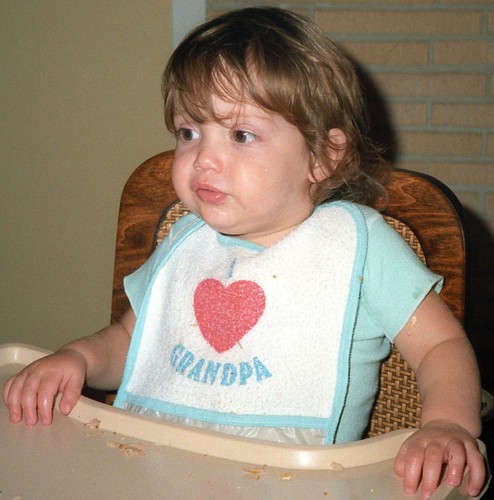
I am going through old slides; tonight they are about Bry when he was 15 months. In his high chair he was beautiful---cheeks full of baby fat, big wondering eyes, alert, curious. Several took my breath away, I just had to show them to Yvette, but her room is quiet.
Monday, January 4, 2010
Missing Gma
My therapist says, "You're fine."
My depression is better; my loneliness is unchanged. When Lucy is here, we talk and if not, at least I hear some one doing the dishes, running the sweeper, making my bed, making the noises of a housekeeper. When she is gone, my loneliness sets in; TV helps little, I tire of reading, I avoided snacking which only makes me more aware of my expanding middle. Nothing works.
Today's visit to Robert's party was a perfect example of what's going on. It was noisy as usual; when Gram was with me, she would stand next to me, chat with me, comment on the decor, the food, the attendees, so I didn't have to feel alone because I was unable to have a conversation with anyone else because of my hearing. Today, without her, the loneliness was double-bad.
I've started my campaign to make things better. I arranged for a bridge game every Thurs with Wilma. That with a game every Fri with Joan (Pleason) will help. And perhaps another weekly game will help. There is always the realization that I will always miss Gram no matter what, that I will always be lonely.
Stay tuned.
My depression is better; my loneliness is unchanged. When Lucy is here, we talk and if not, at least I hear some one doing the dishes, running the sweeper, making my bed, making the noises of a housekeeper. When she is gone, my loneliness sets in; TV helps little, I tire of reading, I avoided snacking which only makes me more aware of my expanding middle. Nothing works.
Today's visit to Robert's party was a perfect example of what's going on. It was noisy as usual; when Gram was with me, she would stand next to me, chat with me, comment on the decor, the food, the attendees, so I didn't have to feel alone because I was unable to have a conversation with anyone else because of my hearing. Today, without her, the loneliness was double-bad.
I've started my campaign to make things better. I arranged for a bridge game every Thurs with Wilma. That with a game every Fri with Joan (Pleason) will help. And perhaps another weekly game will help. There is always the realization that I will always miss Gram no matter what, that I will always be lonely.
Stay tuned.
Friday, December 4, 2009
Mary & Jerry Jackson at the Mayflower Hotel for the inauguration
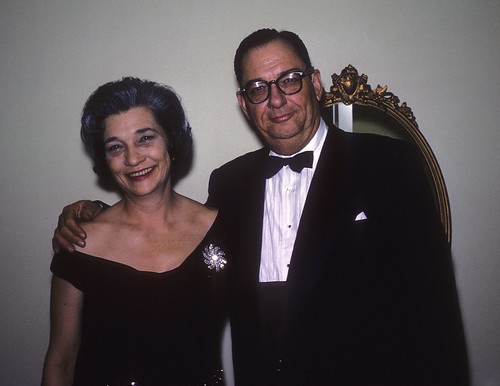
Mary & Jerry Jackson at the Mayflower Hotel for the inauguration, originally uploaded by keithsjackson.
Jerry told Gma, "Dan and I have an unusual relationship. I'll do anything he asks of me and he'll do the same for me." As Jerry tells the story about himself, he was a drunk, an hourly wage earner at Champion Paper in Pasadena ,Texas, and loaded with debts. An attack of appendicitis put him in the hospital, making his personal situation much worse. At the time he was dating Mary, a widow with two teenage children. She never left his bedside, never gave up on him. He dried up and never drank again. He began the climb up the executive ladder at Champion. At the same time he was a close friend of LBJ .
He was referred to me for his annual exams at which time he was able to tell me his personal problems and enlist my help. His number one problem was his mother whom he called every day. I became her physician which helped some of her anxiety. Once he called me from the airport where he was scheduled to leave for Argentina. His mother had called him in great distress--could I help? I called his mother's houseman who said he would look into the matter. All fixed.
Jerry made it possible for us to attend the LBJ inauguration in great style. We visited him and Mary in Alaska and stayed with them in their house for a week while they showed us the sights. When he had some dental work done while on a trip to Tokyo, he wouldn't take the antibiotic the dentist prescribed until he phoned me for my OK.
He had no more than a 12th grade education but at the peak of his success he was a vice president in charge of purchasing, a powerful position in an international corporation. He had a native intelligence that carried him far; as he boasted, "MBAs? I hire and fire 'em."
He was all-Texan. And he was a true blue friend.
Wednesday, December 2, 2009
Macchu Pichu

Gpa says: A Peruvtan landmark that was so thrilling that I wanted to climb around on it.
Friday, November 13, 2009
Alamo Scouts
Recently I had a phone call from a retired army officer who is compiling an oral history of soldiers who had served in the Alamo Scouts in the South Pacific in WWll. I had been the medical officer for the Scouts from January through March 1945.
He happened to mention that an officer had been given the "mushroom treatment." He explained, "That means that he is kept in the dark and fed a lot of shit."
He happened to mention that an officer had been given the "mushroom treatment." He explained, "That means that he is kept in the dark and fed a lot of shit."
Monday, October 5, 2009
Face to Face with Nature
Last week Yvette and I watched Part Three of the PBS documentary, "The National Parks." Most of the 2-hour segment was devoted to the Grand Canyon; it reminded me of our visit to the Canyon in 1982. What I saw at that brief visit affected me more than any other photographic subject I had ever encountered.
We parked our car and I grabbed my Nikon. Because the weather was threatening, we walked through the souvenir shop to get to the South Rim. The wind had picked up and I could feel the mist of the approaching rain on my face. Protecting my camera lens with my cupped hand, I moved as close to the edge of the Rim as I could. An enormous gray cloud filled the entire Canyon; only a few of the higher peaks were visible and above them wisps of gray whipped about. Lightning flashed but I was too far away to hear the accompanying thunder.
I began snapping frame after frame; when I felt rain on my forehead, I shielded my camera and slowly backed away to the shelter next to Yvette. She wiped my face of raindrops-----and tears; I had been crying.
I did not understand what had happened to me until I had prints made from the best negatives on the roll. It was then that I realized that bad weather was a much better time to get good shots than in bright shining times. A deeper response, until then hidden from me, was that my emotions from the power of nature, its beauty or its destructive capabilities, resonated to an unsuspected depth within me.
We parked our car and I grabbed my Nikon. Because the weather was threatening, we walked through the souvenir shop to get to the South Rim. The wind had picked up and I could feel the mist of the approaching rain on my face. Protecting my camera lens with my cupped hand, I moved as close to the edge of the Rim as I could. An enormous gray cloud filled the entire Canyon; only a few of the higher peaks were visible and above them wisps of gray whipped about. Lightning flashed but I was too far away to hear the accompanying thunder.
I began snapping frame after frame; when I felt rain on my forehead, I shielded my camera and slowly backed away to the shelter next to Yvette. She wiped my face of raindrops-----and tears; I had been crying.
I did not understand what had happened to me until I had prints made from the best negatives on the roll. It was then that I realized that bad weather was a much better time to get good shots than in bright shining times. A deeper response, until then hidden from me, was that my emotions from the power of nature, its beauty or its destructive capabilities, resonated to an unsuspected depth within me.
Saturday, September 19, 2009
The American Dilemma
I was in the Philippines in the spring of 1945. As the war wound down there was little for me to do, so I plunged into Gunnar Myrdal's 2-volume study of the American negro, "An American Dilemma." His conclusion was that America had been founded on the belief that "all men are created equal," yet the negro had always been treated shabbily. This played on the conscience of the American people; thus, the dilemma: proclaim equality, yet harbor hate and actively and passively discriminate aginst the negro.
Considering today's reaction to our African-American president, it's clear that the dilemma persists.
Considering today's reaction to our African-American president, it's clear that the dilemma persists.
Saturday, August 29, 2009
Trying to Change Bad Grammar
I have a thing about the proper use of the verb, “diagnose.” When I read a sports columnist report that a quarterback had been diagnosed with a torn ligament in his knee or hear a news anchor say that an actress had been diagnosed with breast cancer, my reaction is the feeling I get on hearing nails scrape a blackboard. There may be other instances of ignoring proper grammar, but something down deep in me stirs to a boil when “diagnose” is misused. I guess it all started when I started editing in earnest for a national medical journal. I had published a few articles before that but had never paid much attention to using words for clarity and preciseness. At a lunch at a medical meeting I happened to mention that I did a bit of editing of grand rounds for the hospital. A cardiologist sitting next to me asked if I would like to have them published in the bimonthly journal of which he was the editor for internal medicine. So it began---the attempt to convert the spoken word into the written word, always trying to use words whose meaning was exactly what the speaker intended. When I encounter the misuse of “diagnose,” I react by sending an email as follows: “You can diagnose a flat tire. You can diagnose flat feet. You can diagnose bad teeth. But you cannot diagnose a person. You can say that “a doctor diagnosed a ruptured cartilage in the quarterback’s knee” or that “her physician made a diagnosis of breast cancer.” Long ago I stopped sending corrections to abusers of grammar because I soon found I was not changing anybody’s bad habits---the misuse of “diagnose” continued without a pause. I heard from only one person I wrote to: Elizabeth Farnsworth of The News Hour. I had written her about her report that someone “had been diagnosed with breast cancer.” She thanked me for my letter of August 11th, 1999 (hers was dated November 29, 1999) apologized for responding so tardily, and said she would try to incorporate the proper use of “diagnose” in her delivery.
Monday, August 24, 2009
Two Immigrants
Here are the stories of two immigrants; their common theme is the deep desire to get to the land of freedom and opportunity.
My father wanted to go to America. As he made plans, his mother cried bitterly and begged him to stay, even suggesting he join the Russian army, which showed how desperate she was to prevent him from going so far away. But he was determined: at age twenty he left Rudney, Ukraine, for Minsk and then headed north to the German border. Before he could get there he was caught by Russian soldiers. He spent four weeks in jail, then was sent home. About a year later he tried again; this time he visited Rabbi Meyer in Minsk for a blessing, and made for the border. He was successful. He crossed Germany to Hamburg, embarked on the Prince Oskar for the two week sail to Philadelphia. At the immigration desk he was dismayed to learn that Congress had recently passed a law that all immigrants must have $25 in their possession as a requirement before entering the country. Where was he to get $25? Then a kindly gentleman handed him the money, asking no questions and wanting him to sign no papers. It was HIAS in action. The Hebrew Immigrant Aid Society was active all over the world helping new arrivals past regulations and other problems. Dad went with the other immigrants to a railroad station, a tag with his name, destination and his brother's name pinned to his coat. He was given a basket with sandwiches, cake, and fruit, courtesy of the Prince Oskar. After a day and night of travel he arrived in Pittsburgh. He wandered around until a policeman, accustomed to newly arrived immigrants, offered to help. He put Dad on a streetcar and instructed the motorman to drop him at Eighth Avenue in Munhall. The streetcar stopped in the middle of the block as a favor to make it easy to find #510, but Dad didn't know which direction to go. He drew on one of his sayings, "A peasant can get to Moscow with his tongue." He walked into a clothing store, managed to explain his problem, and in a few moments was knocking on the door at #510. He had completed his journey; he was united with his older brother Louis who had preceded him to the States by four years. It was October 1914.
Flora, who has the evening shift caring for Mom, also has a remarkable story of coming to America. She was born in Oaxaca, nearly the most distant city in Mexico south of the border. When she was fifteen, she resolved to go to America. She set up what sounds like an ambulatory cafe: whatever fruits, vegetables, meat and fowl she could buy, she would cook and sell as a street vendor. She worked all day, seven days a week. Using the "layaway" plan she turned her earnings over to a "coyote." After about a year, when she had accumulated $400 and despite pleadings by her mother, she and about twenty others and the "coyote" headed for the Arizona border. On American soil she was loaded on a truck with the other illegals to Gainesville, Florida. The trip was punishing: there was no room to lie down and she had little chance to sleep or even be comfortable. At no time, from the day that she started saving money to the moment she crossed the border, did she have any fears or doubt about what she was doing; it helped that she was a teenager, upbeat and full of energy. In Florida she began day-long work as a "picker"; she picked peanuts, jalapeño peppers, tomatoes, and oranges. The hardest were the oranges: she had to carry a heavy basket, and move the ladder from tree to tree; the worst hazard was the bees that tormented her unmercifully. Next she was taken to Selma, North Carolina, where she "dug potatoes," lugging a sack to fill during the long days' work. When she became pregnant, she delivered in a hospital in Rocky Mount, a small town north of Selma. Medicaid helped with her bill. She went to Washington, D.C. where she obtained papers certifying her as a legal resident. She moved to Houston in 1990 and became a citizen in 1996; she was proud to take the examination in English. Soon after, her parents moved to Houston.
written by Dan
My father wanted to go to America. As he made plans, his mother cried bitterly and begged him to stay, even suggesting he join the Russian army, which showed how desperate she was to prevent him from going so far away. But he was determined: at age twenty he left Rudney, Ukraine, for Minsk and then headed north to the German border. Before he could get there he was caught by Russian soldiers. He spent four weeks in jail, then was sent home. About a year later he tried again; this time he visited Rabbi Meyer in Minsk for a blessing, and made for the border. He was successful. He crossed Germany to Hamburg, embarked on the Prince Oskar for the two week sail to Philadelphia. At the immigration desk he was dismayed to learn that Congress had recently passed a law that all immigrants must have $25 in their possession as a requirement before entering the country. Where was he to get $25? Then a kindly gentleman handed him the money, asking no questions and wanting him to sign no papers. It was HIAS in action. The Hebrew Immigrant Aid Society was active all over the world helping new arrivals past regulations and other problems. Dad went with the other immigrants to a railroad station, a tag with his name, destination and his brother's name pinned to his coat. He was given a basket with sandwiches, cake, and fruit, courtesy of the Prince Oskar. After a day and night of travel he arrived in Pittsburgh. He wandered around until a policeman, accustomed to newly arrived immigrants, offered to help. He put Dad on a streetcar and instructed the motorman to drop him at Eighth Avenue in Munhall. The streetcar stopped in the middle of the block as a favor to make it easy to find #510, but Dad didn't know which direction to go. He drew on one of his sayings, "A peasant can get to Moscow with his tongue." He walked into a clothing store, managed to explain his problem, and in a few moments was knocking on the door at #510. He had completed his journey; he was united with his older brother Louis who had preceded him to the States by four years. It was October 1914.
Flora, who has the evening shift caring for Mom, also has a remarkable story of coming to America. She was born in Oaxaca, nearly the most distant city in Mexico south of the border. When she was fifteen, she resolved to go to America. She set up what sounds like an ambulatory cafe: whatever fruits, vegetables, meat and fowl she could buy, she would cook and sell as a street vendor. She worked all day, seven days a week. Using the "layaway" plan she turned her earnings over to a "coyote." After about a year, when she had accumulated $400 and despite pleadings by her mother, she and about twenty others and the "coyote" headed for the Arizona border. On American soil she was loaded on a truck with the other illegals to Gainesville, Florida. The trip was punishing: there was no room to lie down and she had little chance to sleep or even be comfortable. At no time, from the day that she started saving money to the moment she crossed the border, did she have any fears or doubt about what she was doing; it helped that she was a teenager, upbeat and full of energy. In Florida she began day-long work as a "picker"; she picked peanuts, jalapeño peppers, tomatoes, and oranges. The hardest were the oranges: she had to carry a heavy basket, and move the ladder from tree to tree; the worst hazard was the bees that tormented her unmercifully. Next she was taken to Selma, North Carolina, where she "dug potatoes," lugging a sack to fill during the long days' work. When she became pregnant, she delivered in a hospital in Rocky Mount, a small town north of Selma. Medicaid helped with her bill. She went to Washington, D.C. where she obtained papers certifying her as a legal resident. She moved to Houston in 1990 and became a citizen in 1996; she was proud to take the examination in English. Soon after, her parents moved to Houston.
written by Dan
Monday, August 10, 2009
An advantage of Old Age
Are you skeptical that I have found something in my old age that gives me a thrill? I can't blame you, but I swear it's true. It's a very important part of our national culture that Yvette and I enjoy practically every evening. No, it's not THAT. It's old movies. And what is so remarkable about that? It's that my memory is so bad that the movies I enjoyed in the 30s and 40s have become enjoyable again, they are almost like new. That means that "Modern Times," Chaplin's masterpiece, will have scenes that I remember clearly and will make me giggle, but I can never recall what led up to his working with those huge machines and how he escaped from the factory. But seeing the movie again with the advantage of captioning means that it's like new.
I've seen "Double Indemnity" many times; Fred MacMurray and Barbara Stanwyck and Edward G. Robinson are superb in their roles; I know the plot well. But now I see the camera angles and the use of shadows to add to the tension, subtleties that show how Hollywood exploits lighting and the camera.
Old timers like Marie Dressler and Wallace Beery and Victor McLaglen didn't need talkies to be stars. Instead of following the plots I watch their miming and appreciate how they portray feelings and action, often "chewing the drapes," but always impressive.
Old black and white movies have it all over those in color. And the early movie stars, male or female, had no wrinkles; their perfect complexions which I''ve now become aware of are due to the wonder of lighting which fools the camera and makes the actors timeless.
And the Basil Rathbone duels---always the clash of weapons where it seems someone is bound to get a swordpoint in the gut. Yet I've learned about the choreography of these scenes which permits the fighting to go on and on , always with the potential for wounds but nothing fatal until the script says so. I now see every combat as a study of dance with weapons.
I'm fascinated by film stars Valentino, Garbo, Fairbanks, Gable, and the Barrymores. They are so subtle, they mime perfectly, they capture the screen with ease. Now I concentrate on their makeup, the lighting, the camera angles and see things that my adoring childhood eyes ignored completely.
What I enjoy most out of seeing old movies are the opening scenes. I usually can recall what a movie is about but rarely can remember how the movie opens and how the plot is introduced. The Hollywood writers were masters of that: they were captivating, usually subtle, always smooth. Hollywood has come back to me; old movies are new again.
Sunday, August 2, 2009
You should meet Oleg
Everyone loves a success story; it means a lot when a family member is the person you're hearing about.
If you met Oleg, you would find him a shy, unassuming young man, with a ready grin and a mop of jet-black hair. There is no way by just looking at him to know what he has been through. And he'd never offer to tell you his story. But it's a remarkable one.
When Oleg was about age 12, his family was becoming more and more uncomfortable living in the Russian Crimea. Anti-Semitism had always been present but it was getting worse. They had to leave. There were few options; they would have preferred the United States but it was not taking Russian citizens. When Oleg came home in tears from school after being bullied for being a Jew, his mother made the decision: the family—Oleg, mother, stepfather, stepbrother, grandfather (my cousin), grandmother, and great-grandmother—was going to Israel as quickly as possible.
With a few household and personal belongings they flew to Vienna and then on to Israel. After the family settled, Oleg was hospitalized for a circumcision; the Russians would not permit that and Oleg's grandfather felt that action had to be done to initiate Oleg's becoming a true Jew, a descendant of Abraham. When asked about it, Oleg, now 26, says, "It hurt."
Then at age 13, he joined several other refugee teens to become a bar mitzvah. He adjusted to Israel—went to school, learned English and Hebrew. He went to college, became interested in computer science, served his expected time in the army, all the while continuing his studies. He scuba dived, learned parasailing, traveled to Europe and South America.
Recently he completed a M.Sc., probably in computer science.
Pictures of him show a tall, handsome guy with a gorgeous body and a look of pleasure in life.
Today I received an email from him; he is planning a trip back to the Crimea to visit his Aunt Dora (my cousin), give her some money, and visit "nostalgic places."
Quite a guy, quite a story.
If you met Oleg, you would find him a shy, unassuming young man, with a ready grin and a mop of jet-black hair. There is no way by just looking at him to know what he has been through. And he'd never offer to tell you his story. But it's a remarkable one.
When Oleg was about age 12, his family was becoming more and more uncomfortable living in the Russian Crimea. Anti-Semitism had always been present but it was getting worse. They had to leave. There were few options; they would have preferred the United States but it was not taking Russian citizens. When Oleg came home in tears from school after being bullied for being a Jew, his mother made the decision: the family—Oleg, mother, stepfather, stepbrother, grandfather (my cousin), grandmother, and great-grandmother—was going to Israel as quickly as possible.
With a few household and personal belongings they flew to Vienna and then on to Israel. After the family settled, Oleg was hospitalized for a circumcision; the Russians would not permit that and Oleg's grandfather felt that action had to be done to initiate Oleg's becoming a true Jew, a descendant of Abraham. When asked about it, Oleg, now 26, says, "It hurt."
Then at age 13, he joined several other refugee teens to become a bar mitzvah. He adjusted to Israel—went to school, learned English and Hebrew. He went to college, became interested in computer science, served his expected time in the army, all the while continuing his studies. He scuba dived, learned parasailing, traveled to Europe and South America.
Recently he completed a M.Sc., probably in computer science.
Pictures of him show a tall, handsome guy with a gorgeous body and a look of pleasure in life.
Today I received an email from him; he is planning a trip back to the Crimea to visit his Aunt Dora (my cousin), give her some money, and visit "nostalgic places."
Quite a guy, quite a story.
Wednesday, July 15, 2009
A Tale of my Tail-bone
I've never broken a bone. So, today after my orthopedist found that I had a cracked coccyx, there was a mystery: I recalled no fall or blow, no auto accident. Here is what I came up with:
This past spring I began to have sweats. All tests found nothing; I cut my dose of Zoloft in half. That reduced the sweats, but my depression came back: my weight plummetted by more than 22 lbs.On June 7th we went to ballet. Lucy, our housekeeper drove and Yvette occupied the front passenger seat. I sat in the middle of the back seat of my Mercedes so that Irv and Sherry Kraft could sit on either side. It was a 10 minute ride to their house to pick them up; Sherry decided not to go so I was able to move off the middle section to sit on the softer side. At ballet I began have pain in my rump. It continued over the next 5 weeks. When the pain refused to leave, I sought help and the fractured coccyx came to light.
To put it all together: my loss of body fat exposed my lower back /coccyx and a 10 minute ride on the middle section of the back seat was enough to crack my tailbone.
This past spring I began to have sweats. All tests found nothing; I cut my dose of Zoloft in half. That reduced the sweats, but my depression came back: my weight plummetted by more than 22 lbs.On June 7th we went to ballet. Lucy, our housekeeper drove and Yvette occupied the front passenger seat. I sat in the middle of the back seat of my Mercedes so that Irv and Sherry Kraft could sit on either side. It was a 10 minute ride to their house to pick them up; Sherry decided not to go so I was able to move off the middle section to sit on the softer side. At ballet I began have pain in my rump. It continued over the next 5 weeks. When the pain refused to leave, I sought help and the fractured coccyx came to light.
To put it all together: my loss of body fat exposed my lower back /coccyx and a 10 minute ride on the middle section of the back seat was enough to crack my tailbone.
Monday, July 13, 2009
An anniversary
Today I called Dr. Roy Sessions & wished him "Happy Anniversary." He laughed. "Which one?" Twenty-six. Yes, July 13th, 1983 is the date of my partial laryngectomy at Memorial Hospital in the Big Apple. I've called Roy every year to thank him for curing me of my laryngeal cancer and leaving me able to speak without an electronic device or through a tracheostomy opening. I've followed him (by phone) from New York to Washington,D.C., back to New York at Beth Israel and now in retirement at Hilton Head. He's writing a book on medical ethics in cancer surgery.
Wednesday, July 8, 2009
Fun in My Spare Time
I'm going through my photos, some as far back as 1982. Lots of interesting places: Grand Canyon in a rainstorm, bend of the Bow River (Canada), Scurlock Bldg Garage at 3:00am, interior view of a cone-like flower, dunes of gypsum, etc. Probably my biggest lesson was to learn that not every frame in a film cassete (36) was going to be a masterpiece, that I had to take frame after frame after frame to get the shot that would satisfy me. I learned something from every teacher: the first just said,"Take more," the last said, "Let's crop to make the print more interesting."
My world of photography has been replaced by bridge, also a stimulating, challenging pastime. It's more social because I have a partner and I have opponents, contrasting to picture-taking where I was alone with camera & tripod & light and my efforts to match Ansel Adams & other pioneers.
I wonder what I'll try next?
My world of photography has been replaced by bridge, also a stimulating, challenging pastime. It's more social because I have a partner and I have opponents, contrasting to picture-taking where I was alone with camera & tripod & light and my efforts to match Ansel Adams & other pioneers.
I wonder what I'll try next?
Subscribe to:
Posts (Atom)